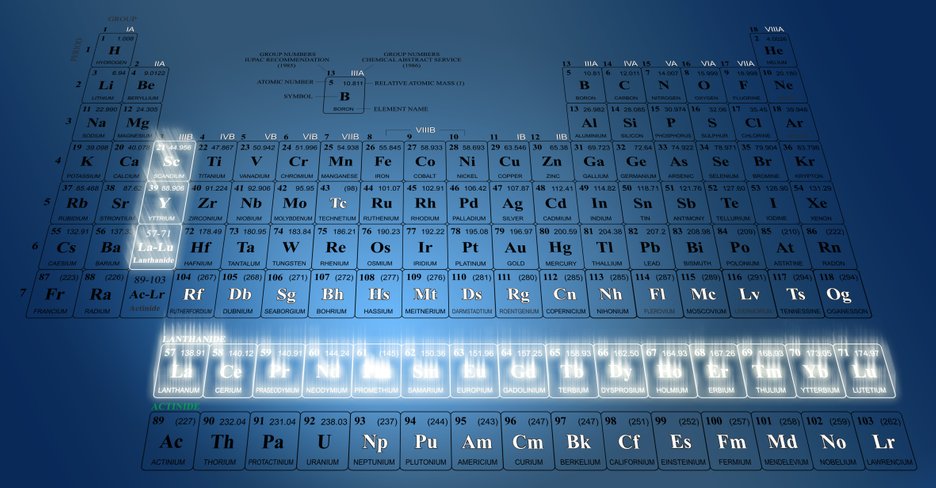
Rare earth elements (REE), a group of 15 elements referred to as the lanthanide series in the periodic table of elements.
In addition to 15 elements, scandium and yttrium are added to this categorization because they have similar properties to the lanthanides and are found in the same ore bodies.
REEs are key components in many electronic devices that we use in our daily lives, as well as in a variety of industrial applications.
The Fen carbonatite complex, a peralkaline-carbonatitic ring complex is situated near lake Norsjø in the Nome municipality in Telemark county, southeast Norway.
It consists of a circular 5 km2 core with various carbonatites and alkaline igneous rocks (mainly of the melteigite-ijolite-urtite series), intruded 583 +/- 10 Ma ago into Mesoproterozoic granitic Telemark Gneiss (ca. 1105 Ma old).
The intrusion was followed by intense faulting and brecciation, producing several phases through metasomatic alteration and fenitization of the country rock (Brøgger 1921, Sæther 1957, Andersen 1989,Verschure & Maijer 2005).
The original minerals of the gneiss, quartz, biotite and amphibole (hornblende), were altered or replaced by aegirine-augite and sodium amphiboles. Microcline and oligoclase were also replaced by mesoperthite and chessboard albite (Verschure & Maijer 2005).
A fenite aurole surrounds the western and southern parts of the complex, as well as metasomatic alteration of the fenite at the contact with the carbonatite (Kresten & Morogan 1986, Andersen 1989).
Source: Mindat.org
Pre-Feasibility and Feasibility
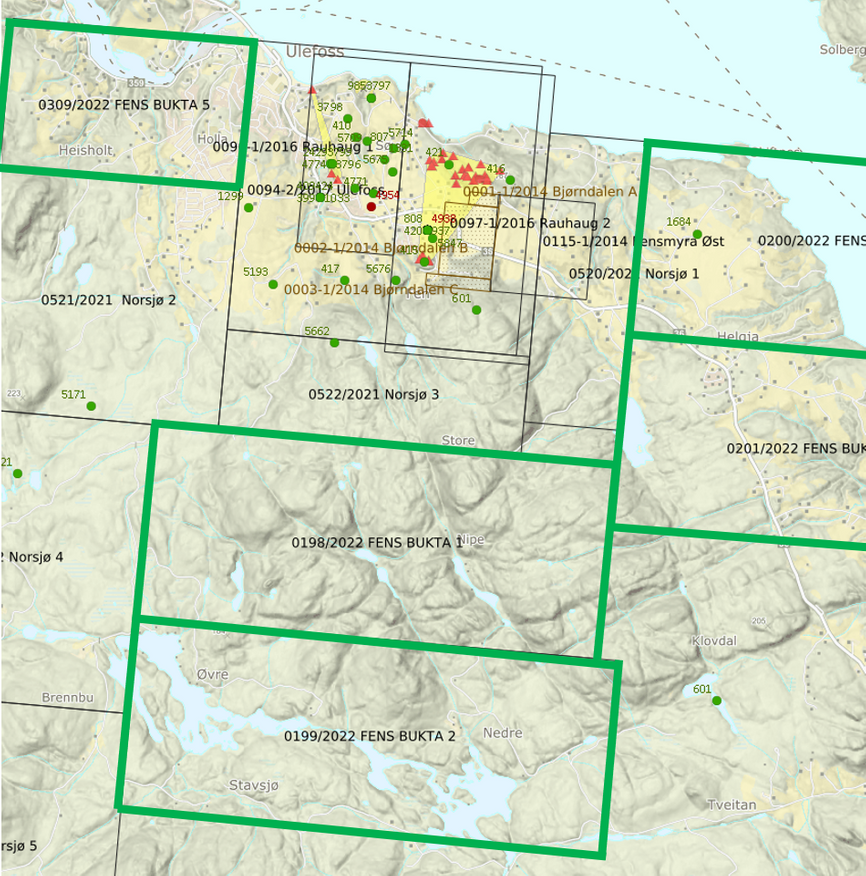
Three companies have exploration rights at the Fen Complex.
REE Exploration has been given
five substantial areas situated around the existing two search-companies.
REE Exploration have the exclusive right to explore and assess FENSBUKTA 1-5 and have conversations with several geologists in relation to exploration areas.
We have also opened dialogue with several investors and possible co-owners. Exploration drilling program is assumed to start Q1 2023.
Copyright © reexploration.no